


Human papillomavirus (HPV) is a common disease that develops as a result of an infection of viral origin.Papillomavirus occurs in most people, regardless of gender.But in frequent cases, this virus does not show characteristic symptoms that can be used to determine the presence of infection.
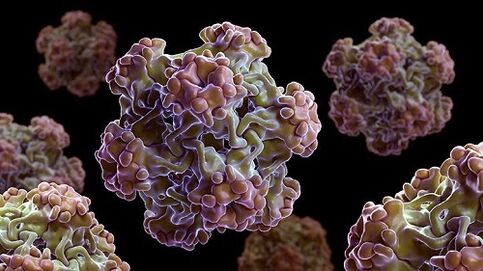
What is HPV infection?
Many people do not understand where this virus comes from and what it is.Human papillomavirus is a chronic viral disease.It is easily spread through contact with an infected person.This virus appears as a result of the causative agent of chronic human papillomavirus infection, which consists of various types, entering the body.However, some of these viruses do not cause harm.But there is another category of viruses, because new growths appear on the surface of the skin and mucous membranes.There is also the most dangerous type that not only affects the genital area, but also causes cancer.
When HPV enters the body, it does not immediately have a negative effect, because it has to go through certain processes that can disrupt the body's functions gradually.
First, it must penetrate the cell and then attach to it securely.When the body's protective function is reduced, infection can cause clinical manifestations.But, despite the ability of the virus, the body is quite capable of destroying it on its own.The virus may be present in the body for a long time, but the disease may not appear immediately.After all, the immune system fights viruses, destroying pathogenic factors before they can cause harm to health.But since the defense weakens with age, HPV can cause cervical cancer in women, and penile and larynx cancer in men.
Why does infection occur?
The infection is often sexually transmitted, even when contraceptives are used.There are also other situations when you are susceptible to HPV infection, these include:
- infection through scratches or abrasions;
- contact with infected skin;
- consumer hygiene items;
- surgical instruments.
If a woman is sick with this virus and becomes pregnant, she can infect her child.
You should be careful when using other people's razors or towels, as the virus can remain on the personal belongings of an infected person.There are cases when the infection occurs through contact with the affected skin surface.This usually happens during a massage.Medical personnel also have a high risk of infection from inhaling dust during laser removal of genital warts.

However, without certain conditions, the virus is difficult to show its activity.Factors that contribute to the manifestation of HPV:
- body hypothermia;
- early sexual life;
- hormonal imbalance;
- as a result of medical procedures such as abortion or intrauterine devices;
- lack of hygiene;
- smoking and drinking alcohol;
- the presence of other infectious diseases in the form of genital herpes, chlamydia, gonorrhea;
- pregnancy.
Manifestations of HPV infection
Viruses differ from other microorganisms in that they must invade cells and then attach to the nucleus.After all these actions, the affected cells will receive a signal from the virus particles to synthesize proteins.
Because the immune system can suppress the activity of the virus, a person often becomes a carrier of the infection without knowing it.In this case, HPV occurs without obvious symptoms, which is the main reason for the active spread of various diseases.If the patient does not undergo examination, he will not know that there is a human papillomavirus infection in his body, because it develops without external manifestations.Therefore, the patient will continue to infect others without realizing it.However, HPV does not live long in the external environment, because it has low resistance to its aggressive factors.For this reason, healthy people quickly become infected.
When the virus reaches the surface of the skin, the basal layer of the epidermis is affected.However, it can remain latent for a long time without causing symptoms of infection.
As soon as favorable conditions appear, the virus will begin to affect cells negatively, resulting in the appearance of symptoms.
The main symptoms of HPV
Human papillomavirus infection can be determined by certain signs, namely by formations that appear in various places with high humidity.Papillomaviruses are usually localized in areas of the skin and mucous membranes.It especially often shows itself in the oral cavity, conjunctivitis, larynx, bronchi, rectum and genitals.

Indirect signs of HPV appear in the form of precancerous conditions.Oncological diseases rarely develop.But exceptions are cervical cancer and penile cancer, because the stage of this disease is often observed.However, you do not need to panic, because in the early stages, cancer is easily treated.
Symptoms are not immediately detected if the mucous membrane or skin is covered with only a single wart.
What does a papilloma look like?
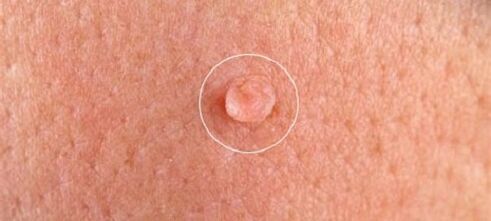
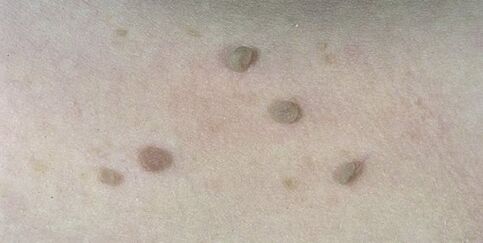
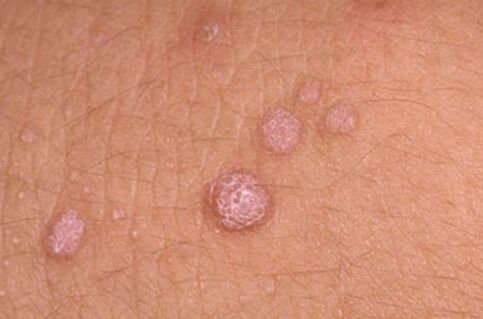
Human papillomavirus manifests itself as neoplasms similar to common warts, but unlike them, they are softer.Warts caused by papillomavirus look like small nodules.Papilloma in the form of warts can be seen on the hands.HPV is also usually localized on the face or legs.Often such warts do not cause negative consequences.
The manifestation of the virus can be in the form of condylomas, which, unlike warts, grow in the genital area.If such tumors are not treated, they can grow actively.
In addition, their presence significantly interferes with sexual activity, and there may be painful sensations during urination.Condylomas are easily damaged, they can constantly bleed, causing irritation in the perineum, which ultimately leads to the development of bacterial infections.
How does HPV develop?
The virus goes through 3 stages of development:
- HPV infection in the body;
- precancer;
- Cancer.
The last stage should be avoided because it has irreversible consequences.Even precancerous conditions can be treated successfully.
The incubation period for HPV takes about a month.However, the virus can only remain in the body without causing anything.
Being infected with HPV does not mean that a person will immediately experience skin manifestations and cancer.It is impossible to say exactly how long the human papillomavirus will show itself, because it is individual and depends on the characteristics of the body.
For HPV infection, the incubation period is 3 weeks.The period can extend up to 9-12 months.
The average is 3 months.If there are no clinical and histological signs of infection, this may mean that the human papillomavirus is asymptomatic.
If the virus does not go away on its own after a few years, it means it has become a chronic form of carriage.In this case, the virus particles have taken root well in the cells, which is why the action of active destruction can begin at any time.In this case, the virus will begin to actively produce proteins, which will disrupt all phases of the cell cycle.As a result, old cells that should no longer reproduce will divide.But there may still be certain mechanisms that will prevent the influence of virus particles.Epithelial cells multiply rapidly due to the fact that HPV attacks them aggressively.This causes the nucleus of the infected cell to take on an irregular shape and change color.This process is considered a precancerous condition.

If the epithelial cells divide actively and uncontrollably under the influence of the virus, this leads to genetic problems and mutations.In addition, the tissue has the ability to degenerate into cancer.The transition to the stage of malignant oncology depends on the hormonal state of the female sex.
HPV is classified according to its oncogenic type:
- non-cancerous papillomavirus;
- viruses that have a low risk of cancer;
- infection with an average percentage of cancerous degeneration;
- a type of papillomavirus that causes cancer.
Virus diagnosis
As soon as there is a suspicion of infection, it is better to see a doctor immediately, because papillomas are a serious source of viruses.Since if the integrity of the virus is compromised, the virus can be released into the environment, you can easily infect other people even without sexual contact.To detect the presence of the virus in the body, special diagnostics are carried out.It is recommended to conduct it when various STIs and urogenital infections are detected.
How to determine HPV

Human papillomavirus in adults is first diagnosed through clinical examination.To find out in detail the type of virus and stage, examination is carried out in the form of advanced colposcopy, cytological and histological study of biopsy samples.The virus can be detected by analyzing DNA, antibodies and oncoproteins (E6, E7).Since there are HPV negative and HPV positive, it is important to determine the status of the virus in the body.
If the examination reveals a high number of HPV, in this case the infection has become malignant.Therefore, it is necessary to perform a quantitative analysis to clarify the genotype of the virus.
If the study has shown a reference value, this is the norm, that is, there is no papillomavirus in the body.As a diagnosis, women undergo a colposcopy, and men need to undergo a full examination by a surgeon or urologist.The sooner the disease is detected, the better the prognosis.
HPV treatment
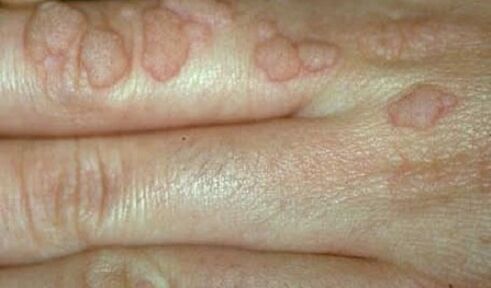
Since this virus is epitheliotropic, it lives only on the surface of the skin or mucous membrane, and does not penetrate deeper layers, so many people wonder if HPV infection can go away on its own.The virus can actually disappear without outside influence.After all, human skin and mucous membranes are constantly changing.Since the surface layer of the skin is renewed after a while, the virus can be removed from the old cells by itself.According to statistics, cases have been recorded where HPV disappeared on its own within three years.
Which doctor should I contact?
In some cases, treatment of the disease is not required, that is, if there are no characteristic warts and precancerous signs.However, it is necessary to determine the stage of development of the disease, and for this it is important to know which doctor to contact if there is a suspicion of the presence of human papillomavirus in the body.You need to visit a therapist or dermatologist.In the future, consultation with other specialists may be necessary, depending on the location of the formation.
Treatment options
To remove human papillomavirus from the body, it is necessary to undergo complex therapy:
- antiviral drugs;
- immunomodulators and multivitamins;
- if necessary, papilloma removal.

As therapy, drugs are prescribed that strengthen and stimulate the immune system.It contains vitamins B6, C, E and adaptogens.Medicines can be in the form of tablets, injections, tampons with ointment, vaginal suppositories.This depends on the development of the disease and the area of occurrence of the papilloma.
Papillomavirus in adults is usually found in immunodeficiency, because it is difficult for the body to cope with the dangerous organism on its own.To fight such infections, it is necessary to take special drugs that contain substances to increase immunity.
High-quality modern medicine helps to quickly get rid of HPV, preventing the possibility of negative manifestations in the form of cancer.
It is not recommended to self-medicate, as there is a high risk of the virus developing.Medicines themselves can be harmful, especially for sexually transmitted diseases.
Depending on the individual characteristics of the body and the manifestation of the disease, the doctor chooses an appropriate treatment method that can prevent the further development of the papillomavirus.
Warts can be easily removed through medical procedures.But papillomas can disappear on their own.If there are a large number of papillomas and warts in one place, only a few large ones are removed, and the rest may disappear by themselves.Since the type of virus may be malignant, it is necessary to start treatment.Therapy should not be delayed if it involves cosmetic problems, because papillomas can appear on the face, especially on the nose, eyelids and lips.
You can remove the affected tissue:
- surgical intervention;
- electrocoagulation;
- laser method;
- cryo-destruction with liquid nitrogen;
- chemical combustion.
Warts should not be picked or cut.Indeed, because of this, many neoplasms can arise.It is better to remove the papilloma from a specialist who will carry out the procedure taking into account the condition of the papillomavirus.
The development of clinical HPV can be prevented with the vaccine.Immunization is recommended for teenage girls before their first sexual intercourse.Thus, the body will be able to protect itself from the harmful effects of infection, without giving the virus a suitable soil for development.Before vaccination, you should consult a dermatovenerologist who treats sexually transmitted diseases and skin.
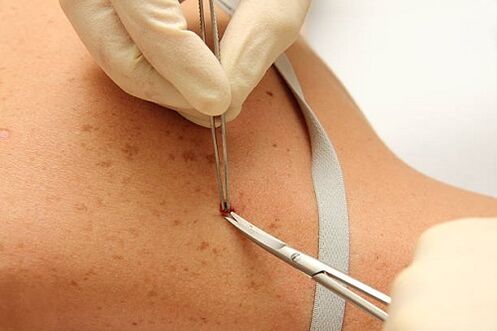
If HPV cannot be eradicated, relapses may occur, where papillomas appear in the same place or in different areas of the skin.
Preventive measures
To prevent the development of human papillomavirus, it is important to know what may be the cause of the infection.Since virus particles are destroyed by a strong immune system, preventing papillomavirus begins with improving the immune system.After all, in this way the defense can effectively fight any HPV virus, preventing it from spreading and causing disease.To do this, it is important to switch to proper nutrition so that the body always receives the necessary portion of vitamins and minerals.
Comprehensive prevention helps keep the immune system in a normal state.After all, in order not to get sick with the papillomavirus, the body must fight it effectively.To do this, it is advisable to lead a healthy lifestyle and abandon bad habits.It is important to properly organize your work and rest schedule, as well as engage in moderate physical activity.After all, overwork can negatively affect the immune system.
Since other people's hygiene items are considered a source of infection, it is better to refuse to use them.It is recommended to exclude casual sex and only use barrier methods of contraception.
For a timely diagnosis of papillomavirus, women should regularly visit a gynecologist, and men a urologist.By following clinical recommendations, each patient can eliminate or prevent the occurrence of infection and other negative consequences of this viral disease.